
Psychology & Self Improvement
How Constant Overstimulation Is Rewiring Your Brain
Modern life constantly bombards the brain with stimulation. Notifications, short videos, social media, music, advertisements, and endless information streams compete for attention every minute of the day.

Over time, the brain adapts to this environment.
One of the biggest effects of overstimulation is reduced attention span. When the brain becomes used to constant novelty and quick rewards, slower activities like reading, deep work, or quiet reflection—begin to feel unusually difficult or boring.
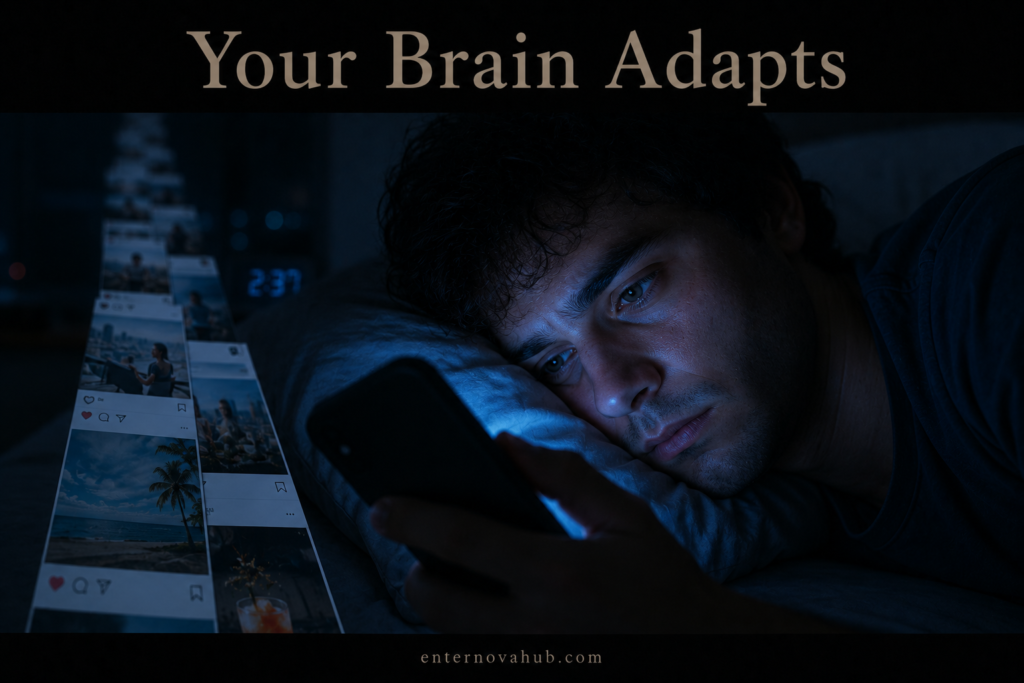
Another issue is mental fatigue. Constant stimulation keeps the brain in an active state for long periods, making true rest increasingly rare. Even during downtime, many people continue consuming content instead of allowing the mind to recover.

Overstimulation can also affect emotional regulation. Quick dopamine-driven habits create stronger cravings for distraction and make silence feel uncomfortable. This is why many people instinctively reach for their phones the moment boredom appears.

The brain is highly adaptable, which means repeated habits gradually shape how it functions. The more attention is fragmented, the harder sustained focus becomes.
The good news is that the brain can adapt in healthier ways too. Reducing unnecessary digital input, limiting screen time, and intentionally spending time in quieter environments can help rebuild focus and mental clarity over time.

The goal isn’t to avoid technology completely—it’s to stop allowing constant stimulation to control your attention without awareness.




Why Your Belly Fat Isn’t Going Away (Even After Dieting)
Belly fat is often one of the most frustrating areas for people trying to lose weight. Even after dieting or...


The Hidden Calories Ruining Your Weight Loss Progress
Many people feel frustrated when they exercise regularly and try to eat healthier but still struggle to lose weight. Often,...


Why Extreme Diets Almost Always Fail
Extreme diets often promise fast results, but most people eventually regain the weight they lose. The problem usually isn’t lack...


The Nighttime Habit Quietly Making You Gain Fat
One of the most common habits linked to weight gain happens late at night. Many people eat relatively well during...


Why You Keep Regaining The Weight You Already Lost
Losing weight is difficult—but keeping it off is often even harder. Many people successfully lose weight for a short period,...


The Harsh Truth About Making Money Online Nobody Talks About
Making money online is often presented as quick, easy, and available to everyone instantly. Social media is filled with success...


How Small Online Skills Turn Into Full-Time Income
Many people believe making full-time income online requires advanced knowledge or a large business. But in reality, many successful online...


Why Most People Stay Broke Even With Internet Opportunities Everywhere
The internet has created more opportunities to make money than ever before. Freelancing, content creation, digital products, remote work, online...


The Online Income Habit That Quietly Builds Wealth
Most people search for fast ways to make money online, but lasting online income is usually built through quiet, consistent...


Why Some People Make Money Online Faster Than Everyone Else
Many people wonder why some individuals seem to make money online much faster than others. While luck can play a...